by Kristen Dolan
Share
by Kristen Dolan
Share
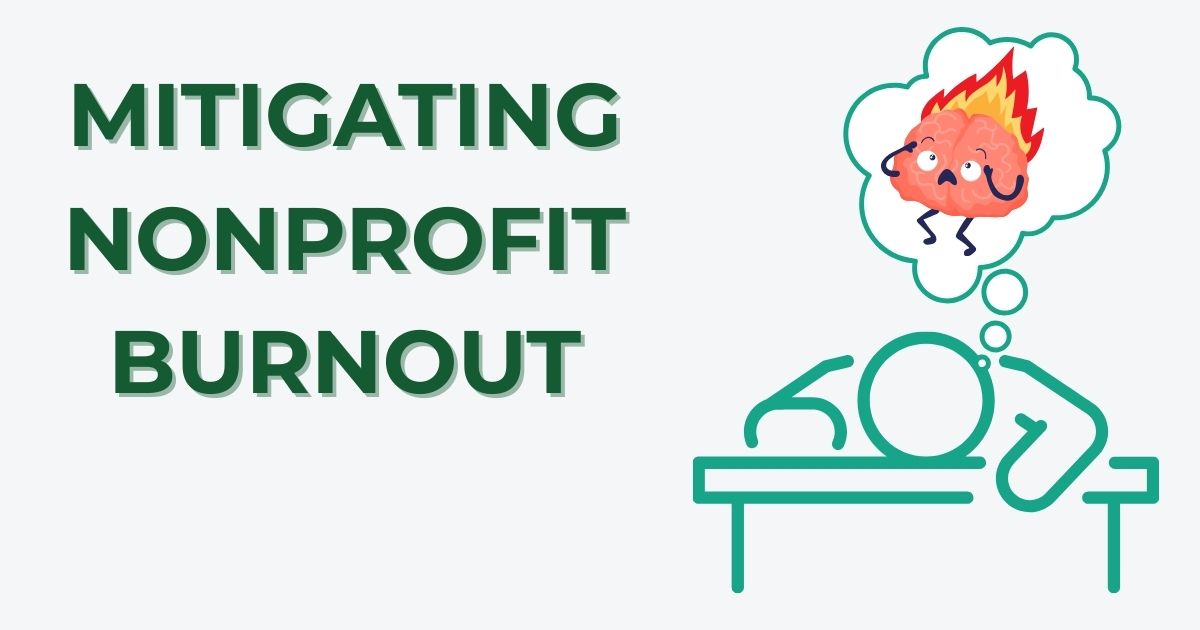
How Can Nonprofits Prevent Burnout in Their Teams?
During today’s Office Hours, someone asked: “How do we keep our staff and volunteers motivated without burning them out?”
It’s a fair question – especially here in the Coachella Valley. In Palm Springs, Indio, Palm Desert, Rancho Mirage, Cathedral City, La Quinta, Desert Hot Springs, Thousand Palms, and Indian Wells, nonprofits carry a lot: food access, housing help, health programs, and the arts. When the people doing this work are exhausted, the whole community feels it.
What burnout actually is (and why it hits nonprofits hard)
The World Health Organization defines burnout as a syndrome from chronic workplace stress that hasn’t been managed well, marked by exhaustion, cynicism, and lower effectiveness. It’s classified as an occupational phenomenon – not a medical condition – but it’s real and it’s serious (WHO definition).
In 2022, the American Psychological Association called burnout and stress “everywhere” and at all-time highs across professions – not just in hospitals or tech, but in mission-driven work too (APA Monitor, 2022).
Nonprofit leaders are seeing it in the data. In a national survey of more than 1,000 nonprofits, 50.2% said stress and burnout were driving workforce shortages – right alongside salary competition and budget limits (National Council of Nonprofits, 2023).
Early red flags to watch for
- Shorter fuses and longer hours: When “staying late” becomes normal, motivation dips.
- Quiet meetings: Fewer ideas, less energy, and lots of “let’s push this to next week.”
- Turnover or no-shows: People step back from shifts – or leave entirely.
If you’re seeing these signs, act now – before it becomes the culture.
What actually works (simple, research-informed steps)
- Make the workload visible. List big projects and routine tasks in one shared view. When work is clear, it’s easier to rebalance – especially for teams wearing many hats.
- Right-size the goals. Ambition is great; impossible is not. Set targets that stretch people but still allow wins each week.
- Build recovery into the plan. Encourage real breaks, real days off, and use of PTO. Leaders must model this – skip the “I’ll just log in Sunday” emails.
- Check in often (but briefly). A 10-minute weekly pulse – “What’s heavy? What’s light? What can we trade?” – can prevent months of overload.
- Recognize progress. Catch people doing things right. Public, specific thanks creates energy and keeps morale up.
- Invest in growth. Training, clear paths to leadership, and chances to try new skills improve retention. The Bridgespan Group highlights compensation, wellness, and culture – plus real listening – as core retention levers (Bridgespan, 2022).
Pro tip for volunteer programs: Offer micro-shifts (60–90 minutes), rotate duties, and create “on-ramp/off-ramp” cycles so volunteers can rest without guilt. Research shows the relationship between volunteering and burnout is complex—burnout can reduce volunteering, but well-designed volunteer roles can also reduce burnout by restoring meaning and connection (Metzger et al., 2024).
A local lens: Coachella Valley realities
Here in the valley, planning with local data helps you set realistic goals and workloads. HARC’s Coachella Valley Community Health Survey (2022) is widely used by local nonprofits and funders to identify needs and design services; it’s cited as helping organizations secure millions for programs each cycle (HARC overview; 2022 Executive Report PDF). Use it to target efforts – so staff and volunteers aren’t stretched thin across too many priorities.
Here’s a simple burnout-prevention plan you can start this month:
Week 1: Map workloads across programs in Palm Springs, Indio, and Palm Desert. Flag any role or person over 85% capacity.
Week 2: Trim or phase projects with the lowest community impact.
Week 3: Pilot micro-shifts for volunteers in La Quinta and Cathedral City; rotate “front-of-house” and “back-of-house” tasks to prevent fatigue.
Week 4: Add a 10-minute weekly pulse check for every team in Rancho Mirage, Desert Hot Springs, Thousand Palms, and Indian Wells. Track one metric: “% of staff reporting workload is manageable this week.”
Talking points for your board (or funders)
- Burnout is measurable and preventable. We’re tracking workload, turnover, and PTO use.
- We’re aligning goals with capacity. That means better results and happier teams.
- We’re using local data. HARC’s survey helps us focus, so every hour counts.
- We invest in people. Training, recovery time, and fair compensation are core to mission success (and retention), not “extras” (Bridgespan, 2022; NCN workforce report).
Bottom line
Nonprofits are built on people. When our people have clarity, rest, growth, and voice, burnout drops—and impact grows. In the Coachella Valley, that means stronger programs, steadier teams, and more neighbors getting the help they need.
STAY IN THE LOOP