by Kristen Dolan
Share
by Kristen Dolan
Share
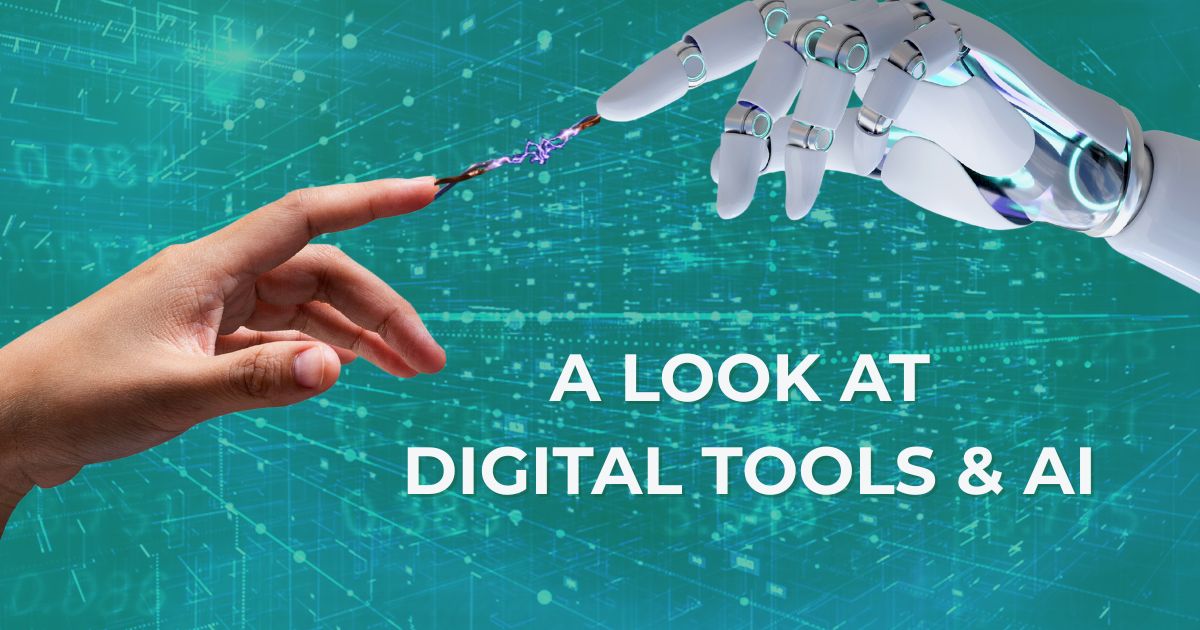
Smarter Nonprofits: How Digital Tools and AI Are Reshaping Efficiency
Picture this: your nonprofit staff in Palm Desert or Indio spends less time buried in spreadsheets and more time building community connections. That’s the promise of today’s digital tools – from cloud-based systems to AI-powered assistants. In a region like the Coachella Valley, where nonprofits juggle everything from food insecurity to arts programs, efficiency isn’t a luxury. It’s essential.
With rising demand, limited budgets, and growing expectations from donors, nonprofits are increasingly turning toward efficiency through technology: cloud tools, AI, CRM systems, and better donor data. These tools aren’t just “nice to have” anymore – they are becoming foundational for nonprofit survival and growth.
AI & Digital Tools: Adoption, Concerns, and Potential
- According to a 2025 survey of nonprofits, 41% agree that AI would greatly benefit nonprofits, and 36% agree that AI would directly impact their fundraising strategies. (Nonprofit Tech for Good)
- At the same time, large shares express concern: 92% of nonprofits report feeling unprepared for AI, and 60% express uncertainty or mistrust about it. (Nonprofit Tech for Good)
- Donors have opinions too. In a recent study, 48.3% of donors identified improving fraud detection as a top benefit of nonprofits using AI, while 44.7% cited operational efficiency. Yet 86.3% of respondents said transparency in how AI is used is very important. (NonProfit PRO)
These data points show that nonprofits see promise in AI/digital tools, but also acknowledge real risks around trust, privacy, and readiness.
Donor Retention: Why Data & CRM Matter
Retention remains a core challenge for nonprofits. Some key verified statistics:
- Globally, nonprofit donor retention rates climbed to about 57.1% in 2023 – meaning just over half of donors who gave in 2022 gave again in 2023. Projections suggested a drop toward 55.6% by end of 2024 (dataro.io) and there will probably be another drop reported this year due to the economy.
- In North America, donor retention tends to hover around 50%, but dropped to 46% in 2023 in certain studies. (dataro.io)
- First-time donor retention is particularly fragile: only 28% of new donors gave a second gift in 2023. (dataro.io)
CRM (Constituent Relationship Management) systems help nonprofits turn data into action: segmenting donors, automating thank-you messages, tailoring campaigns, tracking donor engagement and multiple expert sources agree strong CRM use is among best practices for improving donor retention. (NetSuite)
Recurring Donors & Financial Stability
Recurring donors are often more stable sources of income over time. Verified trends include:
- From 2018 to 2022, the average nonprofit saw its number of recurring donors grow by 127%. (Giving USA)
- In that same period, recurring donation revenue increased 144%. (Giving USA)
- The average recurring donor gave $941.11 in 2022. (Giving USA)
- Recurring donors tend to stay with nonprofits much longer: the average recurring donor lifetime was 8.08 years, compared with 1.68 years for non-recurring donors. (Giving USA)
These numbers show recurring giving is not just about smaller gifts; over years, the cumulative value and predictability are much stronger.
Choosing the Right Tools: Best Practices
Based on available evidence and expert sources, here are reliable guidelines:
- Assess where you are now – what are your biggest bottlenecks? Donor churn? Volunteer coordination? Reporting?
- Train your people – tools don’t work well if staff/volunteers don’t use them or misunderstand them.
- Focus on data hygiene – accurate, up-to-date donor information, tracking of communications, clean records helps both CRM and AI tools perform well.
- Build recurring giving programs – from the stats above, recurring donors bring more stability and long-term value.
- Prioritize transparency and trust – this is a given, but donor concerns about AI, privacy, and data use are all increasing (NonProfit PRO). Don’t make the mistake of giving anyone a reason to distrust your organization.
Local Application: Coachella Valley Nonprofit Scenario
Let’s imagine a small nonprofit in Cathedral City running after-school education and arts. Before adopting digital tools, staff manage donor names on paper or excel, volunteer scheduling via email threads, and marketing via manual processes.
After implementing:
- A basic CRM to track donors, segmentation, and automated thank-you communications
- Cloud tools (shared drives, calendars) for coordination among volunteers, remote staff
- A modest AI-driven tool to assist with donor segmentation and predict donor lapse risk
We might expect measurable improvements: better donor retention (e.g. nudging first-time donors to become recurring givers), more efficient staff time use, improved communication with constituents, and ultimately more stable funding.
Final Thought: Tech as a Tool—not a Gimmick
Digital tools and AI are powerful, but they work best when aligned with strong human interaction, mission clarity, and trust. For nonprofits in the Coachella Valley – where relationships matter deeply and budgets are often limited – choosing tools thoughtfully, training people, and being transparent will make the difference between tech feeling overwhelming vs. truly transformative.
STAY IN THE LOOP